Start typing to see results...
Find the perfect solution
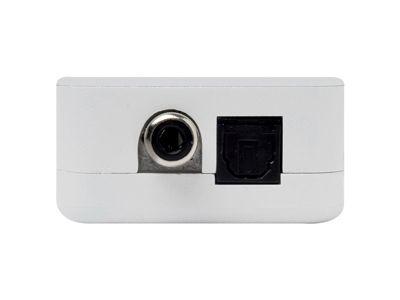
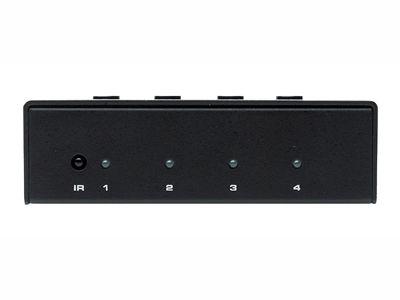
Audio and Accessories brings together everything needed to build, extend, or improve an audio system. This includes stereo preamplifiers and speaker selectors, in-wall, in-ceiling, outdoor, and on-wall speakers, audio power amplifiers, digital audio splitters, speaker cable, mounting brackets, microphones, audio converters and mixers, portable PA systems, headphones, subwoofers, and a wide selection of audio accessories.
A separate-component audio chain has three main parts: a preamplifier (selects sources, adjusts level, applies tone control), a power amplifier (boosts the line-level signal to drive speakers), and the speakers themselves. An integrated amplifier or AV receiver combines preamp and power amp functions in one chassis. Beyond the core chain, mixers combine multiple sources playing simultaneously, microphones add live input, and accessories like cable, mounting hardware, and volume controls tie everything together.
Standard residential and small commercial audio uses low-impedance (4 or 8 ohm) speakers driven directly by a receiver or power amp. Larger commercial installations use 70-volt or 100-volt constant-voltage systems, in which the amplifier produces a higher-voltage, lower-current signal that can drive dozens of speakers tapped at various power levels (0.5W, 1W, 2W, 5W, 10W) over very long cable runs with minimal loss. The 70V/100V architecture is the standard in schools, retail spaces, restaurants, warehouses, healthcare facilities, and any environment with distributed paging or background music.
Background music systems are tuned for low-level, even coverage and pleasant ambience, typically using many small in-ceiling speakers at low tap points. PA (Public Address) systems are tuned for speech intelligibility, with horn or column speakers, higher SPL capability, paging microphones, fire-alarm integration, and zone controllers. Many commercial installations combine both on the same amplifier infrastructure.
This category serves residential whole-home audio, home theater (in-wall and in-ceiling speakers for Dolby Atmos), conference rooms, classrooms, schools (paging plus background music), restaurants and retail (background music with optional paging), houses of worship, fitness centers, hotels and hospitality, recording and broadcast studios, and portable PA for events.
A preamp selects sources and controls level; a power amp drives speakers; an integrated amp combines both in one chassis. In a separate-component audio chain, a preamplifier (preamp) handles input selection (CD, streaming, phono, microphone), volume, tone, and zone routing, but its output is line level. A power amplifier takes that line-level signal and amplifies it to the much higher power needed to drive loudspeakers. An integrated amplifier combines both functions in one chassis, which is more common in residential and small commercial systems. AV receivers extend this further by adding HDMI switching, surround processing, and built-in radio.
Match impedance (usually 4 or 8 ohms) and confirm the amp's power rating covers the speaker's recommended range. Speakers have a nominal impedance (commonly 4Ω, 6Ω, or 8Ω) and a power-handling spec (e.g., 50 to 200W RMS continuous). The amplifier must be stable at the speaker's impedance and deliver power within the speaker's recommended range. Generally err toward an amplifier with slightly more power than the speaker's continuous rating, because running a small amplifier at full clipping damages speakers more often than running a larger amplifier at moderate level. Also check that the room size and listening distance justify the speaker's sensitivity and power capability.
70V and 100V audio are constant-voltage distribution systems used in commercial paging and background-music installations. Standard "low-impedance" audio drives 4 to 8 ohm speakers directly over short distances. In a 70V or 100V system, the amplifier produces a higher-voltage, lower-current signal that can drive dozens of speakers tapped at different power levels (typically 0.5W, 1W, 2W, 5W, or 10W per speaker) over very long cable runs with minimal loss. This is the standard architecture in schools, retail spaces, restaurants, warehouses, healthcare facilities, and any environment with distributed paging or background music across a large area.
Run speaker cable in walls and ceilings where possible, and choose gauge based on length and impedance. For typical residential and commercial in-wall use, 14 AWG or 16 AWG works for most runs up to 50 feet or so. Longer or higher-power installations may need 12 AWG to keep resistance low. Always use cable rated for the application: CL2 or CL3 for in-wall use, plenum-rated cable for return-air spaces above ceilings (mandatory in most commercial buildings by fire code), and direct-burial cable for outdoor underground runs. Match the cable jacket to local building and fire codes, which vary by jurisdiction.
Background music is low-volume continuous audio for ambience; PA is for clear voice and announcements. Background music (BGM) systems are tuned for low-level, even coverage and pleasant ambience throughout a space, typically using many small in-ceiling speakers at low tap points so no single speaker is too loud. PA (Public Address) systems are tuned for speech intelligibility, with horn speakers, column speakers, or larger drivers, higher SPL capability, paging microphones, fire-alarm integration, and zone controllers. Many commercial installations combine both on the same amplifier infrastructure, with paging signals taking priority over background music when activated.
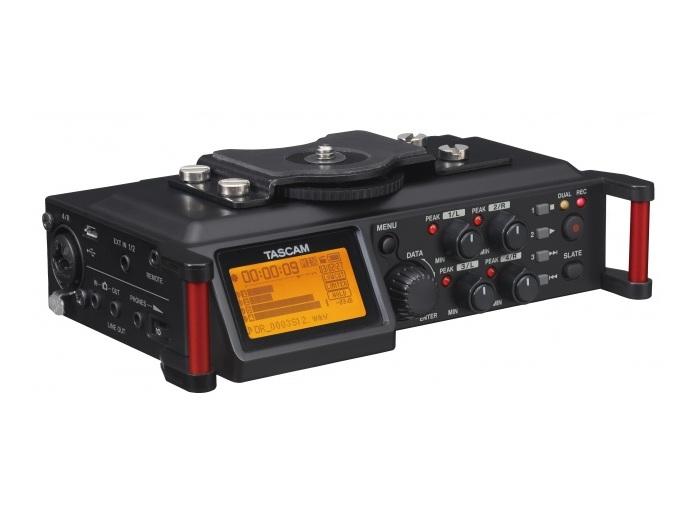
When you need to combine multiple audio sources playing simultaneously. A switcher chooses one source at a time and sends only that source to the output. A mixer combines multiple sources into a single output, with independent level controls on each input. Use a mixer when you need a microphone playing over background music, a worship-team band feeding a single PA, multiple presenters in a panel discussion, or any situation where two or more audio inputs play together. Mixers also provide EQ, effects, and routing capabilities that go beyond what a simple preamp offers.

On order over $300 and more for US and US territory

We Offer a 30-Day Money Back Guarantee

Full manufacturer's warranty and quality assurance

Safe checkout with trusted payment providers